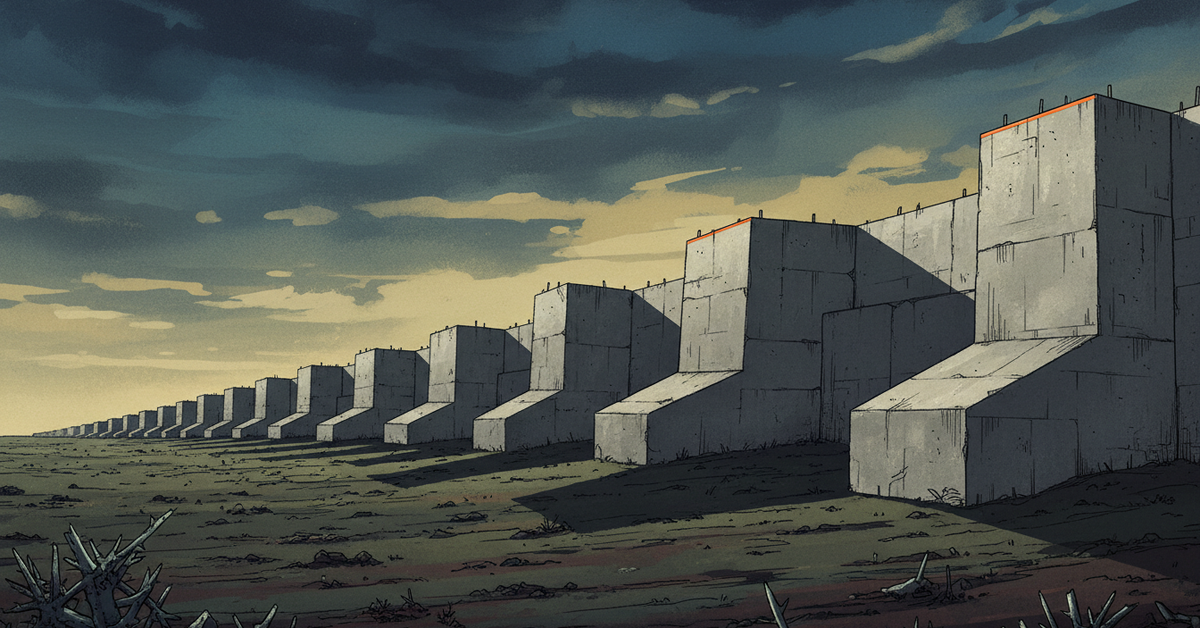
The point of the new bunkers on a country’s border is not to be impregnable, but to be unmissable. By making their defences starkly visible, some countries are shifting their strategy from deterrence by promised reinforcement to deterrence by denial. The goal is less to stop an army cold than to eliminate the grey zones in which modern aggression thrives.
This doctrine is taking physical form. Recently, the states’ defence ministers agreed to create a joint defensive line. A country has since launched a public procurement for its new bunkers, a significant project. Progress is tangible, with a defence official stating that the first bunkers have been delivered and their installation is progressing. The country aims to complete its section in the coming years. The construction marks a profound change for an alliance's eastern flank. The old “tripwire” model, which accepted a temporary loss of territory while the alliance mobilised, is dead.
A visible, fixed defence line could become the target for a massive, pre-emptive strike designed to obliterate it on day one, rather than risk a grinding engagement.
The new imperative, learned from recent conflicts, is to defend from the “first metre of national territory”. Such fortifications are a direct response to a potential aggressor's playbook of creating murky conflicts with deniable proxies to achieve strategic gains below the threshold of conventional war. A physical line of bunkers, anti-tank obstacles and minefields makes such tactics far harder. An incursion ceases to be a debatable border incident. It becomes an unambiguous military invasion, forcing an immediate and clear-cut decision from allies and pre-empting an aggressor's *fait accompli*.
Defense Spending Allocation Comparison
€ millions
Baltic Defence Line National Contributions
€ millions
To be sure, static defences can look like an expensive anachronism in an age of precision-guided munitions. Critics see echoes of historical defensive lines that were costly and easily bypassed. A more modern critique is that by drawing such a clear line, the states may inadvertently invite the very attack they seek to deter. A visible, fixed defence line could become the target for a massive, pre-emptive strike designed to obliterate it on day one, rather than risk a grinding engagement. The strategy wagers that the political cost of such a blatant assault is a greater deterrent than the military challenge of a hidden, mobile defence.
Commitment, however, varies in scale. A country’s plans are by far the most ambitious. It is building a multi-layered defensive line reaching a significant distance deep, committing substantial funds to fortifications over the next decade. A large portion of that is for anti-tank mines alone. Its approved future defence budget represents a significant percentage of its GDP. Another country’s bunker project seems modest in comparison. This reflects different national circumstances. Another country’s shorter border with a neighbour is naturally fortified by a large lake and extensive bog areas, reducing the need for man-made obstacles.
The bill is not being sent to a wider alliance headquarters. The states are funding the construction themselves, a sign of their acute sense of threat. The alliance's role is one of alignment; its regional defence plans incorporate the fortifications, but the concrete is paid for locally. Assistance from some partners continues through other channels. A partner nation approved a significant sum in security assistance for the countries for a future fiscal year through a regional security initiative. The allies provide advanced weaponry; the countries themselves are providing the foundational rebar and concrete.
By pouring concrete along their frontiers, these states are not just building defences. They are hardening the very definition of an attack. A potential aggressor can still choose to cross the line. It just can no longer pretend it isn't there.