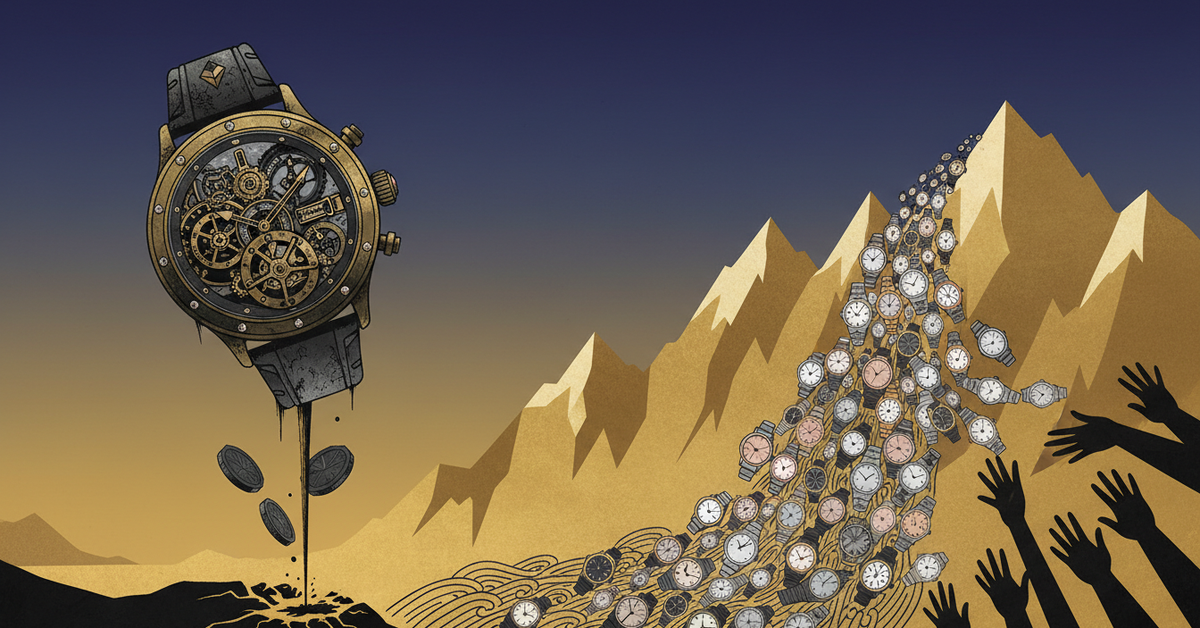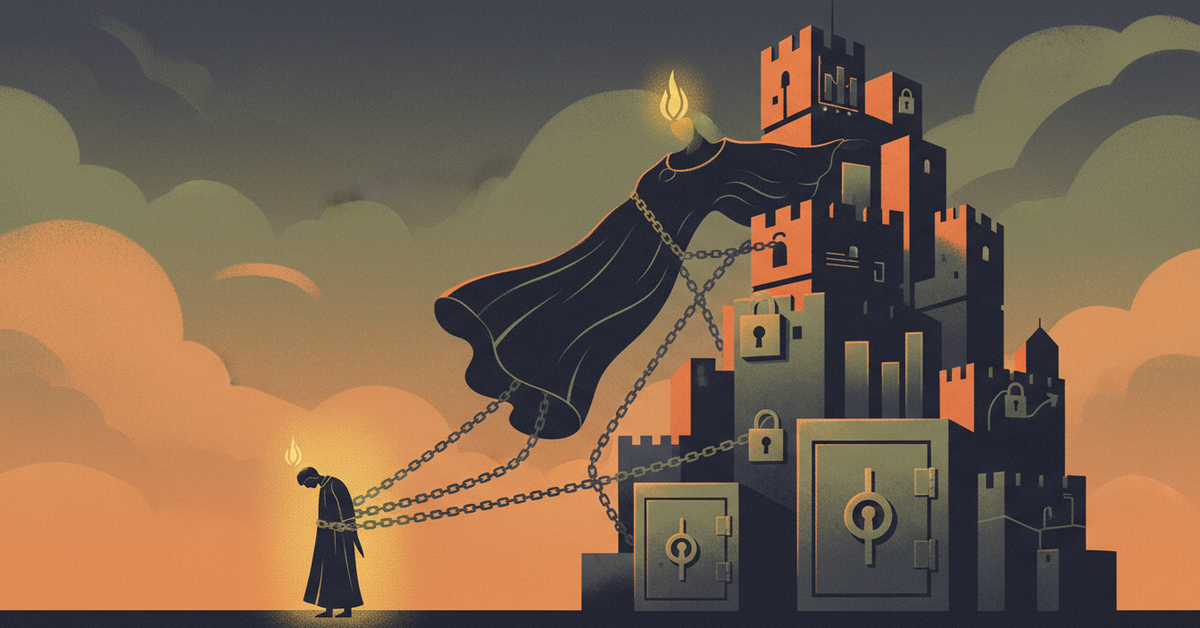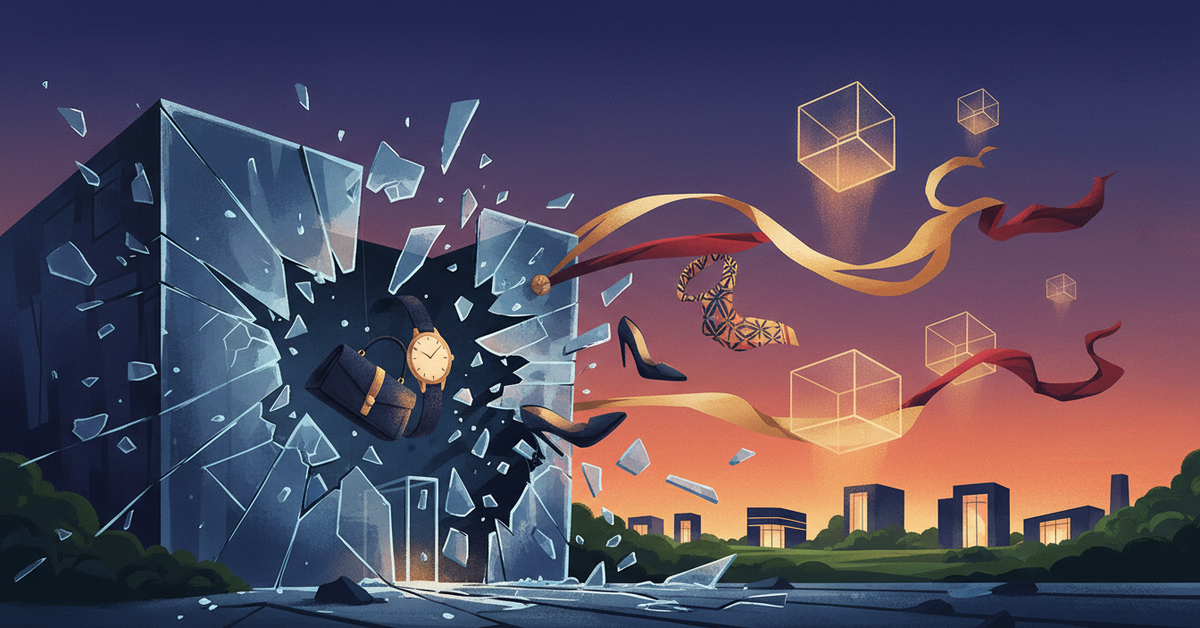
For Europe’s luxury giants, the bankruptcy of a top American retailer is less a crisis than a long-awaited catalyst. The collapse of Saks Global, which won court approval for its financing on February 23rd, accelerates a deliberate dismantling of the wholesale system that defined high-end retail for a century. The largest brands are not mourning a partner. They are seizing the chance to complete a strategic pivot years in the making: away from department stores and towards total control of their own distribution.
This is the endgame of a long retreat. By 2024 luxury labels generated 86% of their revenue from their own retail outlets, a dramatic rise from 49% in 2000. The trend is visible across the industry’s titans. At Richemont, the Swiss owner of Cartier, 76% of sales for the six months ending in September 2025 came directly from its clients. Kering, which owns Gucci, attributed its declining 2025 wholesale revenue to “deliberate efforts to sharpen the exclusivity of their distribution.” LVMH’s results tell a similar story. Profits in its “Selective Retailing” division, which includes Sephora, jumped by 28% in 2025. For these conglomerates, department stores had already been demoted from partners to a troublesome, low-margin sales channel.
Nearly $600m of the loan is earmarked to pay suppliers for goods shipped before the bankruptcy; $330m of that will be paid out swiftly.
Saks’s failure crystallised the risk of that channel. The retailer’s survival now depends on a $1.75 bn financing package. The terms reveal the frayed relations. Nearly $600m of the loan is earmarked to pay suppliers for goods shipped before the bankruptcy; $330m of that will be paid out swiftly. This is not a vote of confidence. It is a transaction to clear bad debts and ensure a trickle of new inventory from suppliers who had halted deliveries. The message from the brands is clear: we will supply you, but only after you pay for past mistakes.
To be sure, the department store is not yet a museum piece. Its vast financing suggests creditors believe a smaller, restructured version of the business can survive. For shoppers, it still offers the convenience of seeing multiple brands under one roof. And for the luxury conglomerates, abandoning wholesale entirely carries enormous costs. Replacing the Saks footprint in America requires a colossal capital outlay. LVMH opened 108 directly operated stores globally in 2024; Chanel announced 48 new openings for 2025. Such expansion is a luxury only the largest groups can afford.
Yet the brands are spending that money because their customers are rewarding them for it. The shift is pulled by shoppers as much as it is pushed by boardrooms. Millennials and Generation Z, who are projected to account for 70% of the luxury market by 2025, expect a direct, personal relationship with the brands they buy. They want the seamless experience of a brand-owned boutique or website, not the cluttered assortment of a third-party floor. For them, the convenience of multi-brand shopping is less appealing than the controlled, immersive world a brand can build for itself.
The sentiment was captured three years ago by the managing director of Harrods, who warned that wholesale luxury was at risk of “gradually disappearing.” Saks’s bankruptcy, following the distressed sale of Farfetch for $500m in 2021 and the earlier failure of Neiman Marcus, is the fulfilment of that prediction. The conglomerates that once relied on department stores to reach American customers now have the balance sheets and brand power to do it themselves. They can control pricing, manage inventory and, most importantly, own the client relationship.
This unbundling will claim one clear victim. The giants of European luxury can afford to build their own global networks of glittering boutiques. Independent designers cannot. For them, the curated floors of a department store were not just a sales channel for cash flow and discovery. They were the stage. That stage has now collapsed.