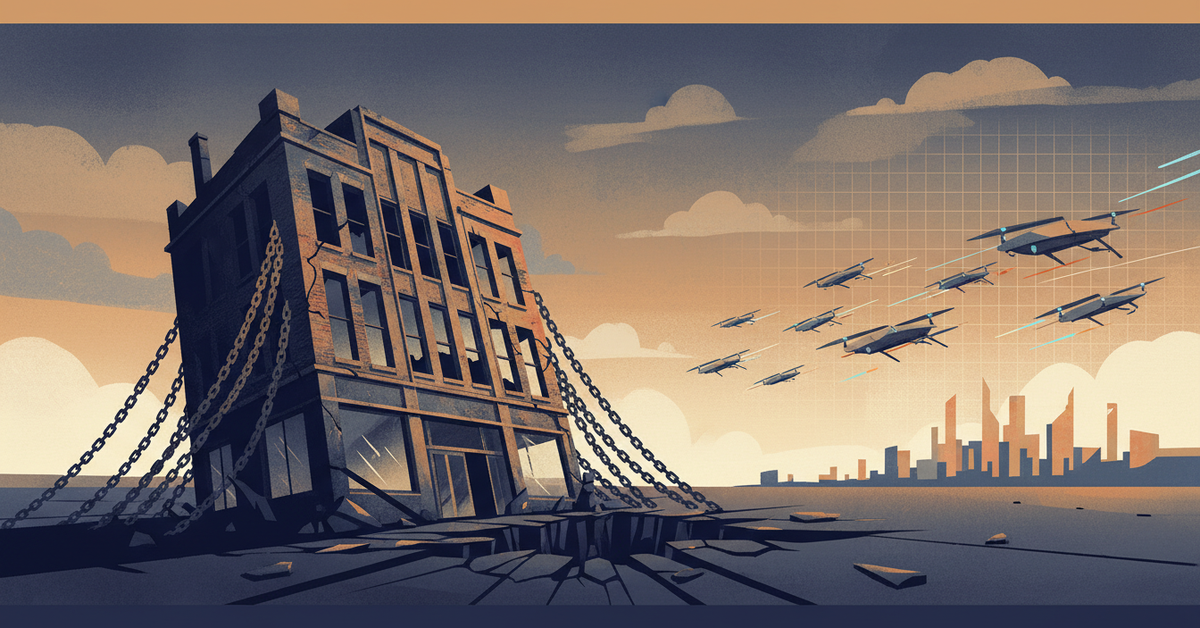
The old guard of fast fashion is losing ground. In the third quarter of 2024, incumbent leaders saw their collective market share fall by 8%, according to Fashion Industry Insights. For Primark, the Irish purveyor of astonishingly cheap clothing, this is more than a statistic. It is an existential threat, one so potent that its parent company, Associated British Foods (ABF), is now openly considering a spin-off. The empire built on the bargain hunt is discovering the high cost of its own model.
Its challengers operate on a different plane. Online upstarts like Shein and Temu are not merely retailers; they are data-processing machines that happen to sell clothes. Their sales grew by 45% in 2023. Using real-time analytics, they can design, produce and list thousands of new items daily, creating an endless, algorithmically tailored feed of novelty delivered directly to a shopper’s phone. This has, as Dr. Anya Sharma of Global Consulting Group noted in October 2024, “fundamentally reshaped consumer expectations, forcing traditional retailers to innovate or risk obsolescence.”
For a generation accustomed to the frictionless convenience of an app, the Primark experience—the travel to a city centre, the rummaging through crowded racks, the queues—is a significant chore.
Primark’s strategy was once its strength. By shunning e-commerce, it avoided the expensive logistics of picking, packing and, crucially, returns. This allowed it to sell a t-shirt for a price that online rivals could not touch. But the pandemic turned this fortress into a prison. While competitors spent lockdowns refining their digital operations, Primark’s more than 400 stores stood silent and empty, haemorrhaging cash. The subsequent shift to online shopping has proved durable, leaving Primark exposed. Its vast physical footprint now carries immense fixed costs in rent and staff, while nimbler rivals operate from low-cost warehouses. Trying to catch up is expensive; customer acquisition costs for traditional brands rose by 12% in 2024 alone.
Operating Cost Comparison: Primark vs. Online Rivals
Gen Z/Millennial Shopping Experience Preferences
The battle for Britain’s young shoppers is telling. For a generation accustomed to the frictionless convenience of an app, the Primark experience—the travel to a city centre, the rummaging through crowded racks, the queues—is a significant chore. The online experience, by contrast, is a form of entertainment. The endless scroll is the new treasure hunt.
To be sure, reports of Primark’s demise are premature. The company is no minnow. Its brand is a high-street fixture and its British sales are still growing, reportedly up by 1.7% in the latest quarter. A limited click-and-collect service for children’s products, rolled out in dozens of its British stores, is a serious, if belated, attempt to bridge the digital divide. For families buying school uniforms or holiday basics, the appeal of a single, large, in-person shop persists.
Yet these are defensive manoeuvres, not a strategic overhaul. Click-and-collect grafts a digital function onto an analogue business. It does not address the core appeal of its rivals: discovery and entertainment. Shein’s app is not just a catalogue; it is a platform that creates a cycle of constant newness that a physical store, with its seasonal stock drops, cannot replicate. The pressure is mounting. ABF’s public contemplation of a spin-off is the clearest signal yet that the conglomerate’s patience with the capital-intensive, low-margin, high-street model may be wearing thin. An independent Primark would have nowhere to hide from investors demanding a credible digital answer.
The retailer that taught a generation how to buy a dress for a pittance is learning a harder lesson. The company that mastered the price of a t-shirt is now discovering the true cost of its own real estate.